
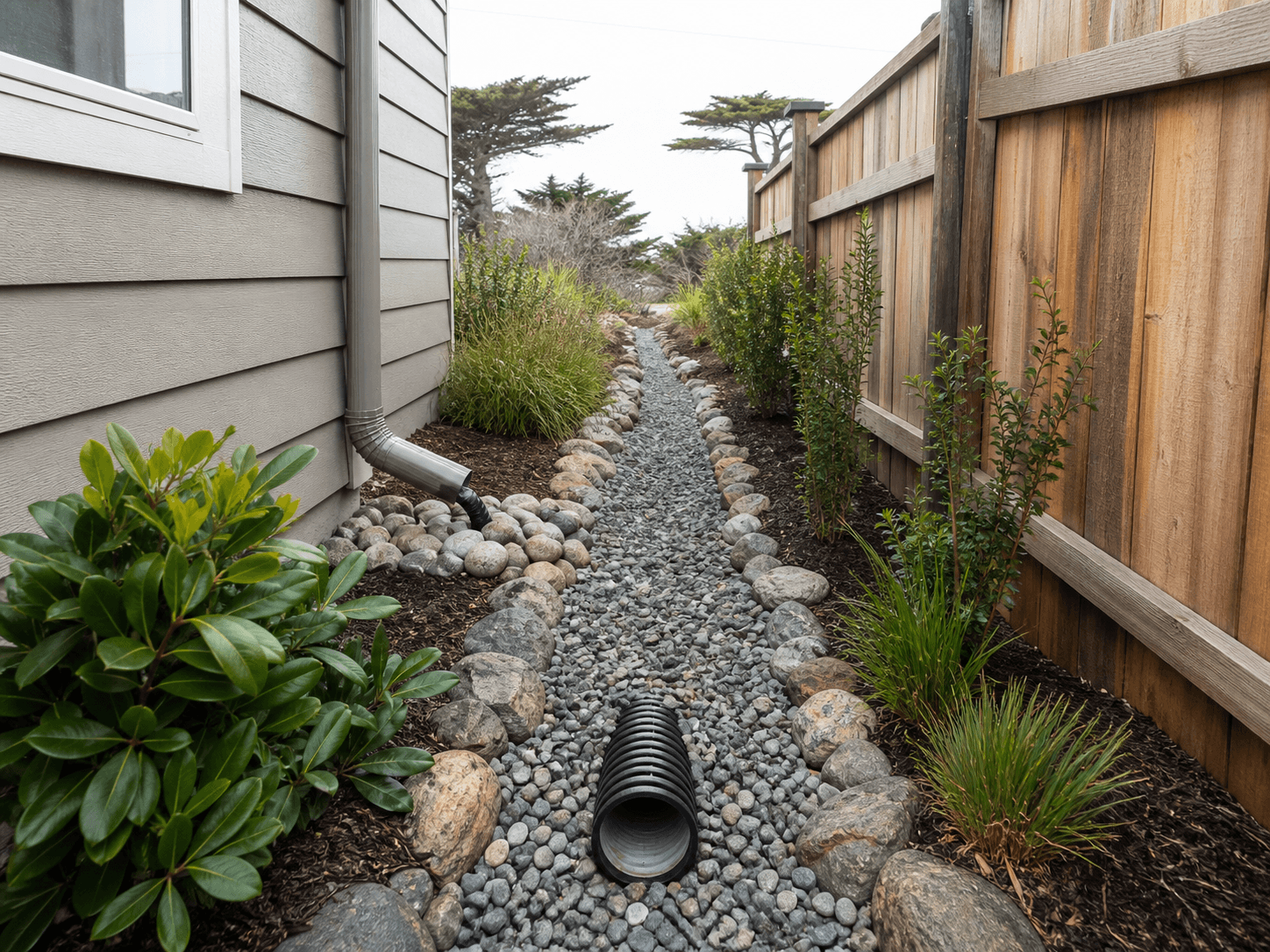
French drains, yard drainage, and grading for standing water
A soggy area is a symptom, not a complete diagnosis. Water may collect because of a low spot, compacted soil, irrigation, roof discharge, a hardscape transition, an uphill source, or several factors working together. Effective drainage planning starts by tracing when the problem appears and where water can move safely.
Small residential improvements may involve surface shaping or another practical way to collect, slow, redirect, or disperse water. The suitable approach depends on grade, soil, structures, property boundaries, utilities, and local requirements. Significant slopes, structural concerns, public drainage, or complex subsurface conditions may require engineering or another specialist.
When to consider drainage, grading & french drains
A drainage review may be useful for visible conditions such as:
- Standing water that remains in a lawn, bed, side yard, or low area after watering or rain
- Mud along a frequently used path, gate, or transition between yard surfaces
- Runoff cutting through mulch or carrying soil away from a planting area
- Water concentrating beside a patio, walkway, wall, or another hard surface
- A recently changed landscape area that now drains differently than before
What the service can include
The proposed work follows an initial site review. Depending on the observed issue, a scope can include:
- Review of visible grades, low areas, runoff paths, soil surface, and affected landscape
- Discussion of when the water appears and how irrigation or rainfall contributes
- Minor surface-grading or low-spot correction where appropriate and approved
- A practical drainage feature or landscape adjustment suited to the specific site
- Identification of conditions that require a permit, engineering, utility review, or specialist
French drain, catch-basin, and grading specifications
A French drain is one tool, not the default answer to every wet yard. The design must identify where water enters, how it is collected, the route it follows, and where it can discharge without creating another problem.
- Document rainfall versus irrigation timing, roof and hardscape runoff, low spots, soil surface, visible slope, utilities, structures, and property boundaries
- Specify pipe type and diameter—often 4-inch for small residential collection systems only when site calculations and conditions support it
- Distinguish perforated collection pipe from solid conveyance pipe, and list washed drain rock, filter fabric, cleanouts, catch basins, grates, and outlet protection where used
- Set elevations and positive fall from collection point to an approved discharge strategy; a buried pipe without a viable outlet cannot solve the water balance
- Refer significant grading, foundations, retaining conditions, public drainage, unstable slopes, or regulated discharge to permitting, engineering, or the appropriate specialist
Measure a Seaside drainage problem →
What affects French drain installation cost?
French drain installation cost depends on diagnosing and building the complete collection and discharge path—not simply buying perforated pipe. A site-specific quote should account for:
- Trench length, depth, width, elevations, excavation method, and restoration area
- Access, roots, utilities, existing hardscape, soil condition, spoil removal, and disposal
- Perforated or solid pipe, filter fabric, washed drain rock, cleanouts, catch basins, channel drains, grates, and outlet protection
- The lawful outlet or infiltration strategy and any work needed between the wet area and that destination
- Testing, engineering, permits, erosion control, specialist work, or exclusions identified during review
A useful estimate separates diagnosis, excavation, materials, disposal, discharge, and landscape restoration. Trench length and wet-weather photos make the first discussion more specific.
Drainage planning for coastal lots and seasonal rain
Dry weather can hide a drainage issue, while winter rain may reveal flow paths that are difficult to see during an ordinary visit. Photos or video taken while water is present can provide useful context for Seaside and Monterey Peninsula properties. Irrigation-related pooling should also be separated from rainfall runoff because the corrections may be different.
Drainage work must avoid creating a new problem for a building, public area, environmentally sensitive location, or neighboring property. No outcome should be promised before the source, route, discharge constraints, and site limitations are understood. Larger or concealed water problems may need investigation beyond routine landscape work.
How the process works
The first step is documenting the water pattern rather than selecting a drain or changing grade immediately.
- Document when water appears. Note whether the issue follows rain, irrigation, or both, how long it remains, and provide photos or video if available.
- Review the visible site. Consider grades, soil surface, low spots, slopes, hardscape, structures, boundaries, utilities, and possible inflow or discharge paths.
- Define an appropriate response. Discuss a practical landscape correction or identify when testing, engineering, permitting, or specialist work is needed first.
- Complete and observe. Carry out the approved scope and explain what should be observed during future irrigation or rain to evaluate performance.
Drainage, Grading & French Drains questions
Why does water stand in my yard after the sprinklers run?
The zone may be applying water faster than the soil can accept it, running too long, leaking, or filling an existing low spot. Irrigation operation and the visible grade should both be checked.
Can a drain solve every soggy-yard problem?
No. A drain needs an appropriate collection point and discharge strategy, and it may not address compacted soil, overwatering, groundwater, or a broad grading issue. The cause should guide the solution.
Should I wait for rain before requesting a drainage quote?
You can request help at any time. Photos, video, timing notes, and marked wet areas from a rain or irrigation event can make a dry-weather review more informative.
When might an engineer or permit be needed?
Significant grading, retaining conditions, structural risk, public drainage, complex slopes, or regulated discharge can go beyond routine landscape work. Applicable requirements should be clarified before work proceeds.